Calcium carbonate: quality, uses, price and worldwide delivery
Looking for calcium carbonate, a specific powder fineness or a supplier that understands your application? Minerallum reviews calcium carbonate enquiries for different sectors in Morocco and international markets.
Request a quoteWhat is calcium carbonate?
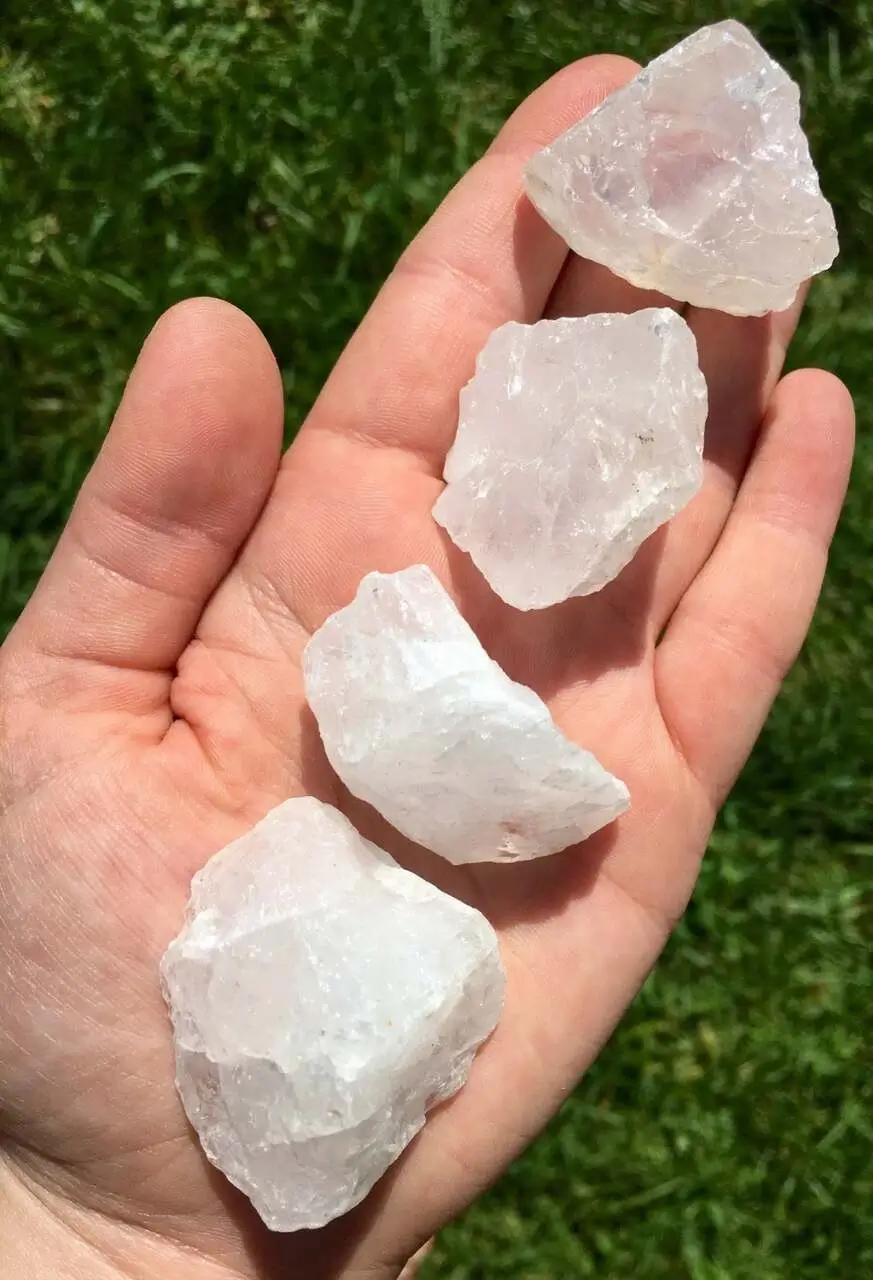
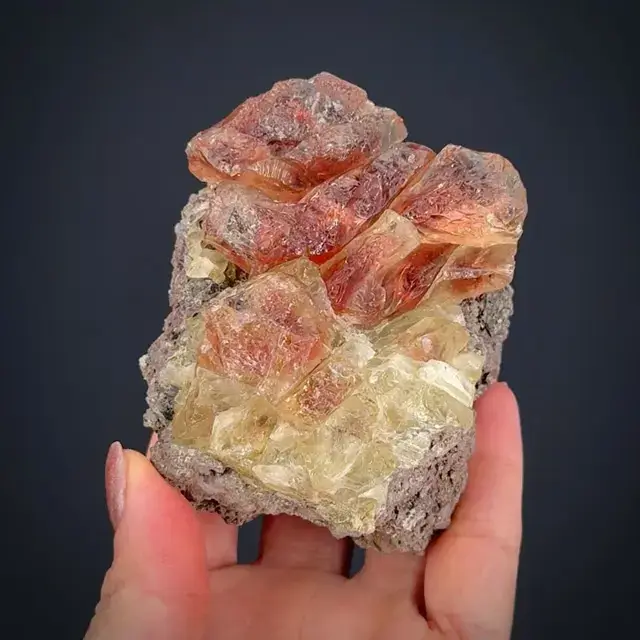
Calcium carbonate is a mineral compound with the chemical formula CaCO₃. It occurs naturally in different rocks and mineral materials, including limestone, calcite and marble.
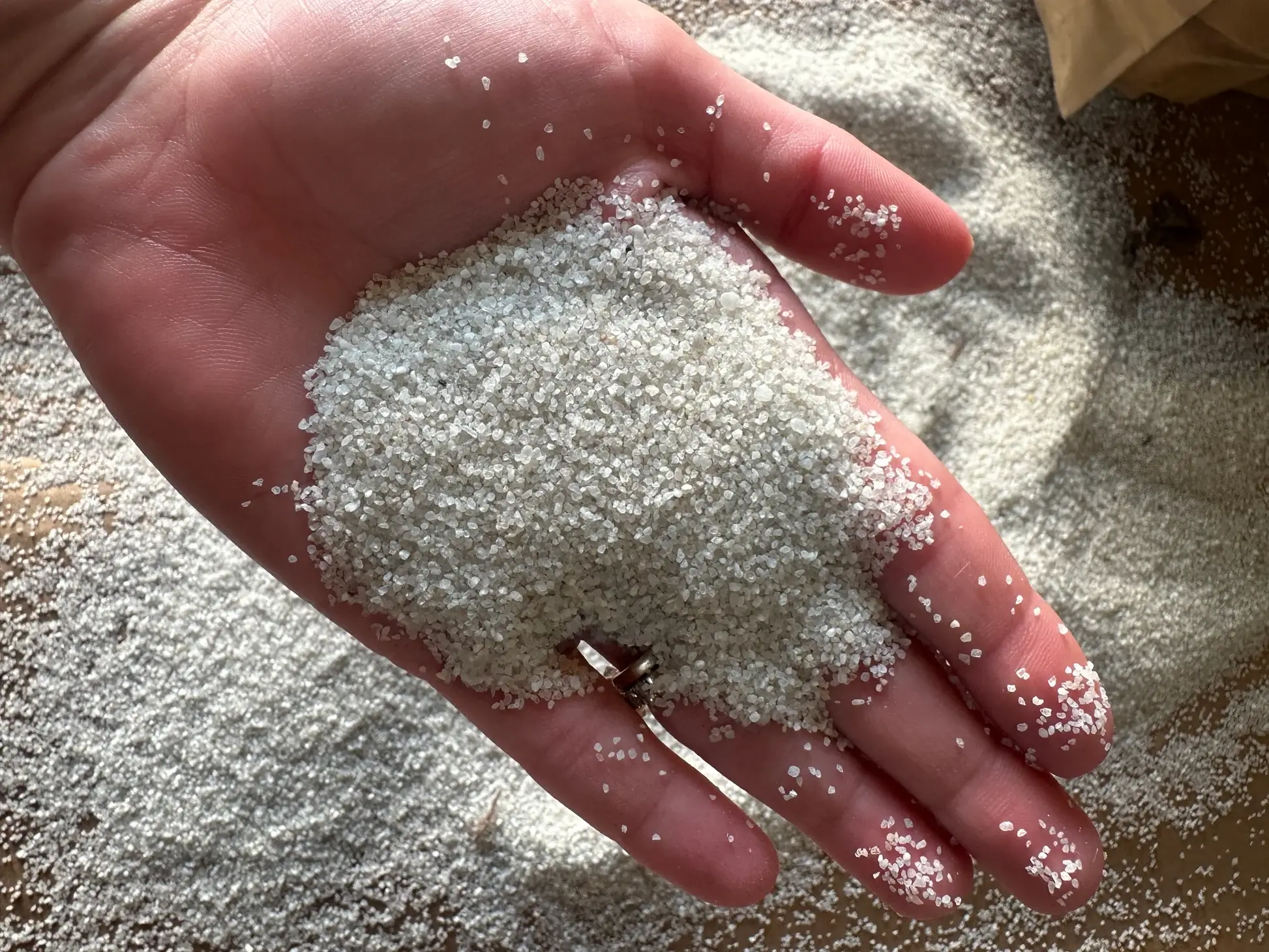
After extraction and selection, the material may be crushed, ground, dried, screened or micronised to achieve a particle size suitable for the customer. It may therefore be supplied as lumps, grains, powder or fine powder.
Calcium carbonate is used in many sectors, but different grades are not automatically interchangeable. CaCO₃ content, whiteness, fineness, moisture, impurities and batch consistency must suit the final application.
Selecting calcium carbonate is not only about choosing the whitest material. Composition, fineness and behaviour within the formulation are equally important.
How is calcium carbonate quality assessed?
The required quality depends directly on the sector and formulation. Calcium carbonate for paint, plastic, paper or construction may require different characteristics.
Representative analysis can confirm the chemical composition. Particle size, whiteness and moisture should also be controlled to ensure consistent use.
| Criterion | Why is it important? |
|---|---|
| CaCO₃ content | It indicates the proportion of calcium carbonate in the material. The required level depends on the application, process and expected final quality. |
| Whiteness | Whiteness may be important for paints, plastics, renders, paper and light-coloured decorative products. |
| Particle-size distribution | Particle size and distribution influence mixing, dispersion, texture, surface finish and finished-product properties. |
| Grinding fineness | Fine or micronised powder may be required for formulations needing improved dispersion or a smoother surface. |
| Moisture | Moisture affects storage, flow, dosing, agglomeration and the actual amount of dry material delivered. |
| Magnesium content | Magnesium may be present in certain carbonate rocks and should be checked when an application requires a precise composition. |
| Silica and other impurities | Silica, clay, iron and other elements may affect colour, abrasiveness, processing and product performance. |
| Oil absorption | This parameter may help predict filler behaviour in paints, resins, sealants and plastic formulations. |
| Batch consistency | Stable composition, colour and particle size reduce production variations between deliveries. |
Calcium carbonate grains, powder and fine powder
Calcium carbonate can be prepared in different forms depending on its intended use. Crushing produces lumps or aggregates, while grinding and micronisation produce finer powders.
Terms such as “fine powder” or “micronised calcium carbonate” should be supported by measurable data, including a particle-size distribution, sieve residue or particle-size value.
Calcium carbonate grains
Granular fractions may be considered for certain construction, treatment, formulation or processing applications.
Calcium carbonate powder
Powder is used in different paint, plastic, rubber, mortar, render and other product formulations.
Fine calcium carbonate
A finer powder may be required to improve dispersion, surface appearance and integration into certain formulations.
Micronised calcium carbonate
Micronised generally refers to a finely ground product. Its actual particle size should be confirmed by analysis.
Natural calcium carbonate
Natural calcium carbonate is obtained from extracted mineral material that is selected and processed according to customer requirements.
Coated or uncoated calcium carbonate
Some applications use surface-treated calcium carbonate. The appropriate form depends on the formulation and should be specified in the enquiry.
What is calcium carbonate used for?
Calcium carbonate is used as a raw material, mineral filler or functional component in a wide range of formulations.
The product should be selected according to CaCO₃ content, whiteness, particle size, particle morphology, moisture and sector-specific regulatory requirements.
Calcium carbonate for paint
It may be used as a mineral filler in certain paints, primers, renders, sealants and coatings. Whiteness and fineness are often important.
Calcium carbonate for plastics
It may be included in different plastic formulations to provide filling, stiffness, opacity or other properties depending on the product.
Calcium carbonate for rubber
Calcium carbonate powder may be used as a filler in certain rubber and elastomer formulations.
Calcium carbonate for paper
Suitable grades may be used as fillers or pigments in certain paper and board production processes.
Calcium carbonate for construction
It may be incorporated into mortars, renders, adhesives, sealants, cement-based products, joints and construction materials.
Calcium carbonate for ceramics
Some ceramic formulations use carbonate materials as a calcium source. Composition must be suitable for the firing process.
Calcium carbonate for animal feed
Specially controlled grades may be used as a calcium source in certain animal-feed formulations. Dedicated compliance is essential.
Agricultural calcium carbonate
Limestone materials may be used in certain soil amendments to reduce acidity. Neutralising value and fineness should be analysed.
Water and environmental treatment
Suitable grades may be considered for neutralisation, remineralisation and different treatment processes according to technical specifications.
Food and pharmaceutical applications
Food-grade and pharmaceutical-grade calcium carbonate products exist, but these uses require dedicated certification, controls and regulatory compliance.
Where can you buy calcium carbonate?
When buying calcium carbonate, the application and required technical characteristics should be defined before comparing suppliers.
Price per tonne should not be the only consideration. A lower-priced powder with unsuitable fineness, moisture or whiteness may create problems during dispersion, dosing or finishing.
Minerallum reviews calcium carbonate enquiries for different sectors in Morocco, France, Europe, Africa and other international markets.
Buy calcium carbonate in Morocco
Provide the delivery city, grade, fineness, quantity, packaging and preferred delivery frequency.
Calcium carbonate supplier
Send your data sheet, application, CaCO₃ content, whiteness and impurity limits.
Bulk calcium carbonate supply
For recurring orders, provide your monthly or annual consumption, storage capacity and receiving constraints.
Export and worldwide delivery
Provide the country, port or address, volume, Incoterm, packaging and required documentation.
Calcium carbonate price and packaging
Calcium carbonate price depends on raw-material quality, CaCO₃ content, whiteness, fineness and the processing operations required.
Grinding, micronisation, drying, screening, surface treatment, packaging, transport and destination influence the final cost.
Bags
Bags may suit trials, small consumption, construction sites and products requiring straightforward handling.
Bulk bags
Bulk bags are a common solution for professional volumes of calcium carbonate powder or granules.
Loose bulk
Loose bulk delivery may be considered for high volumes when transport and receiving installations are suitable.
A relevant price requires information about CaCO₃ content, whiteness, particle size, moisture, possible surface treatment, packaging, quantity and delivery location.
How do you choose a calcium carbonate supplier?
Before confirming a supplier, review the technical data and request a representative sample.
For a sensitive formulation, a laboratory or production trial can confirm dispersion, colour, texture and compatibility with other components.
- Request a chemical analysis showing CaCO₃ content and the principal elements.
- Check whiteness, colour and possible iron or other impurities.
- Review particle-size distribution, average fineness and sieve residue.
- Check moisture and powder behaviour during storage.
- Confirm whether the calcium carbonate is natural, micronised, coated or uncoated.
- Request a suitable technical data sheet and safety data sheet.
- Test a representative sample in the customer’s formulation.
- Check consistency and traceability between batches.
- Confirm net weight, packaging, lead time and delivery conditions.
- Compare delivered cost rather than only the starting price.
Frequently asked questions about calcium carbonate
What is calcium carbonate?
Calcium carbonate is a mineral compound with the formula CaCO₃. It naturally occurs in limestone, calcite and marble and may be processed into grains or powder.
What is the difference between calcium carbonate, calcite and limestone?
Calcium carbonate is the chemical compound CaCO₃. Calcite is a natural mineral form of CaCO₃. Limestone is a rock composed mainly of calcium carbonate.
Where can I buy calcium carbonate in Morocco?
Provide the application, fineness, whiteness, CaCO₃ content, quantity, packaging and delivery city. Minerallum reviews professional calcium carbonate enquiries in Morocco.
What is the price of calcium carbonate?
The price depends on material quality, fineness, whiteness, moisture, surface treatment, packaging, quantity and transport.
Is calcium carbonate available as powder?
Yes. Depending on processing possibilities, it may be considered as powder, fine powder, micronised material, grains or lumps.
What is calcium carbonate used for in paint?
It may be used as a mineral filler affecting texture, opacity, whiteness, consistency and cost in certain formulations.
Is calcium carbonate used in plastics?
Yes. Certain plastic formulations use calcium carbonate as a filler. Fineness, surface treatment and compatibility with the polymer should be checked.
Can calcium carbonate be used in food?
Food-grade calcium carbonate products exist, including E170 in Europe. Material intended for food use must have the required certifications and regulatory controls.
Can calcium carbonate be delivered internationally?
Yes. Minerallum reviews delivery enquiries for Morocco, France, Europe, Africa and other markets according to specifications, volume and destination.
What information should I provide for a quotation?
Provide the application, CaCO₃ content, whiteness, particle size, moisture, possible surface treatment, packaging, quantity and delivery destination.
Calcium carbonate sources and documentation
This page is based on institutional publications covering calcium carbonate, limestone, calcite and their different applications.
- 01 U.S. Geological Survey
Limestone — A Crucial and Versatile Industrial Mineral Commodity
Overview of limestone, a rock composed mainly of calcium carbonate, and its numerous uses.
View source - 02 U.S. Geological Survey
Calcite
Information about calcite composition and its uses in construction, abrasives, agriculture and other sectors.
View source - 03 U.S. Geological Survey
Commodity Statistics and Information
Mineral commodity information covering calcium carbonate, limestone, crushed stone and lime.
View source - 04 EFSA
Calcium carbonate — E170
European information concerning the evaluation of calcium carbonate when used as a food additive.
View source - 05 NIOSH
Calcium carbonate — Pocket Guide
Occupational information about calcium carbonate dust exposure and prevention measures.
View source
Calcium carbonate characteristics should always be confirmed using a technical data sheet, representative analysis, a sample and the requirements of the final application.