Quartz: quality, uses, price and worldwide delivery
Looking for quartz, a quartz supplier, a specific particle size or a reliable delivery solution? Minerallum reviews enquiries for quartz rock, crushed quartz, quartz grains and quartz powder for Morocco and international markets.
Request a quartz quoteWhat is quartz?
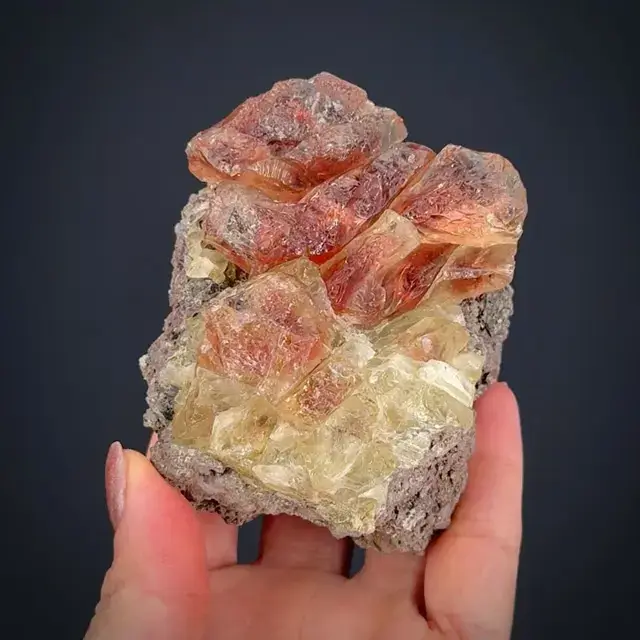
Quartz is a natural mineral composed of silicon dioxide, with the chemical formula SiO₂. It is widely present in the Earth’s crust and occurs in different colours, forms and purity levels.
For professional requirements, quartz may be supplied as rock, selected lumps, crushed quartz, graded grains or quartz powder. The appropriate form depends on the process, the customer’s equipment and the expected finished product.
Two quartz materials that look similar may have significantly different chemical compositions, iron contents, whiteness, particle sizes or contamination levels. These characteristics should be reviewed before ordering quartz for glass, ceramics, construction, resins or another application.
The right quartz is not simply the whitest or most visually pure material. It is the quartz whose composition, particle size and consistency match the intended use.
How do you identify good-quality quartz?
Quartz quality depends on its application. Quartz for ceramics, glass, construction, composite surfaces or technical formulations may require different specifications.
SiO₂ content is important, but it is not the only criterion. Impurities, grain size, colour, moisture and batch consistency can also influence the final result.
| Criterion | Why is it important? |
|---|---|
| SiO₂ content | The silicon dioxide content indicates the silica richness of the quartz. The required level depends on the application and expected final quality. |
| Iron content | Iron oxides can affect the colour of the quartz and finished product. Iron is particularly important for clear glass, white ceramics and certain decorative surfaces. |
| Alumina and other oxides | Alumina, titanium, calcium, magnesium, alkalis and other elements may affect melting, colour, reactivity and quartz performance. |
| Particle-size distribution | Particle size and distribution influence dosing, mixing, compaction, melting, surface finish and consistency of the finished product. |
| Whiteness and colour | Natural colour and whiteness may be important for paints, mortars, resins, composite surfaces and visible decorative applications. |
| Moisture | Moisture affects storage, handling, dosing and the actual amount of dry material delivered. |
| Fine-particle content | Excessive fine particles may generate dust, change material flow or influence quartz performance during processing. |
| Contaminants | Clay, mica, feldspar, organic matter, metallic particles and other contaminants may reduce product quality. |
| Batch consistency | Stable composition and particle-size distribution between deliveries make industrial settings easier to control and reduce production variations. |
Quartz rock, crushed quartz, grains and powder
Quartz can be prepared in different forms according to customer requirements. It may be selected, crushed, ground, washed, dried and screened to achieve a suitable particle size or grading curve.
For an accurate quotation, it is helpful to provide the minimum and maximum dimensions, permitted fine-particle content, tolerances and required quartz form.
Quartz rock
Quartz rock or selected lumps may be required for certain processing, crushing, grinding or sorting operations.
Crushed quartz
Crushed quartz is prepared as lumps or aggregates with controlled dimensions according to the application.
Quartz grains
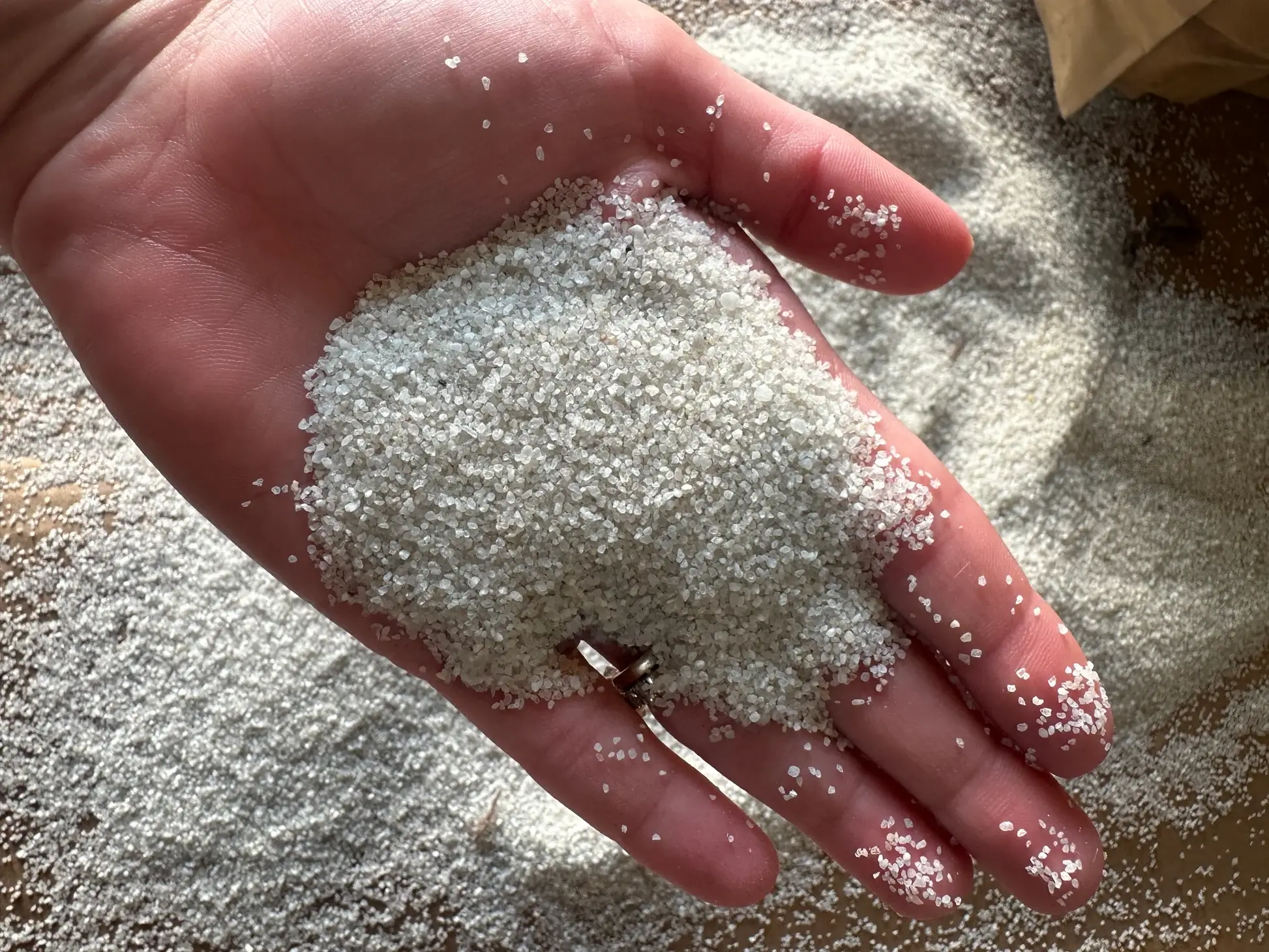
Quartz grains may be graded for composite surfaces, flooring, coatings, filtration and other applications.
Fine quartz
Fine quartz may be used in certain mortar, adhesive, paint, resin and decorative-product formulations.
Quartz powder
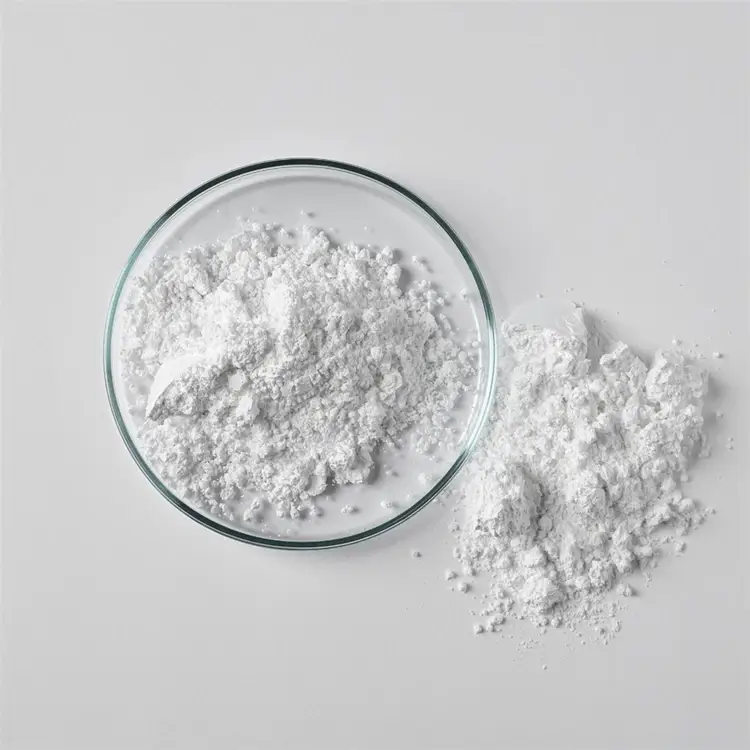
Quartz powder may be used as a raw material or mineral filler in ceramics, resins, paints and construction products.
Graded quartz
Graded quartz is selected when a process requires a stable size range and consistent particle distribution.
What is quartz used for?
Quartz is used in many sectors because of its silica composition, hardness, stability and availability in different particle sizes.
Each use requires a suitable quality. Selection should consider purity, iron content, whiteness, particle-size distribution and any processing applied to the quartz.
Quartz for glassmaking
Quartz and silica-rich materials may be used in glass production. SiO₂ content, iron levels and particle size are particularly important.
Quartz for ceramics
Quartz is used in certain ceramic bodies, glazes and enamels. It contributes to the composition, structure and thermal behaviour of the product.
Quartz for composite surfaces
Quartz grains and powders may be incorporated into slabs, worktops, decorative coverings and resin-bound mineral surfaces.
Quartz for paints and resins
Fine quartz or quartz powder may be used as a mineral filler in certain paints, resins, industrial floors and technical coatings.
Quartz for construction
Quartz may be used in mortars, renders, adhesives, special concrete, flooring, cement-based products and decorative formulations.
Quartz for foundry applications
Certain graded quartz materials may be used to prepare moulds and cores depending on the technical requirements of the process.
Quartz for filtration
Clean and graded quartz grains may be considered for certain filters, granular media and water-treatment systems.
Quartz for abrasives
Quartz hardness may be useful in certain abrasive or surface-preparation applications, subject to applicable safety requirements.
Quartz for silicon and ferroalloys
Quartz-rich materials may be used as a source of SiO₂ for silicon and certain ferroalloy production processes under strict specifications.
Quartz for technical applications
Special or high-purity quartz grades may be required for certain electronic, optical and advanced technological applications.
Where can you buy quartz?
When buying quartz, suppliers should be compared using technical information rather than relying only on photographs or a price per tonne.
A quartz supplier should understand the intended application, specify the available product form, communicate relevant characteristics and review packaging and delivery requirements.
Minerallum reviews quartz enquiries for Morocco, France, Europe, Africa and other international markets. Each project is assessed according to specifications, volume, destination and receiving conditions.
Buy quartz in Morocco
Provide the destination city, required quartz form, particle size, quantity and preferred delivery frequency.
Quartz supplier
Send your technical data sheet, impurity limits, application and the conditions the quartz must meet.
Bulk quartz supply
For recurring orders or larger volumes, provide your monthly or annual consumption and storage capacity.
Quartz export
For international delivery, provide the country, port or address, required volume, packaging and documentation.
Quartz price and packaging
Quartz price depends on purity, colour, iron content, particle size, product form and the processing required to prepare it.
Crushing, grinding, washing, drying, screening, packaging and delivery can significantly affect the final price of quartz.
Quartz in bags
Bags may be suitable for powders, small quantities, trials, construction sites and limited consumption.
Quartz in bulk bags
Bulk bags are suitable for many professional requirements involving grains, powder or crushed quartz.
Loose bulk quartz
Loose bulk delivery may be considered for larger volumes when transport and receiving facilities are suitable.
A quartz price cannot be properly compared without knowing the SiO₂ content, impurities, colour, particle size, product form, packaging, quantity and destination. Standard quartz and high-purity quartz may have very different values.
How do you choose a quartz supplier?
Before choosing a quartz supplier or confirming a large order, offers should be compared using clear technical, commercial and logistical criteria.
When the application is sensitive, a representative sample and a production trial can help avoid selecting an unsuitable material.
- Request a chemical analysis showing SiO₂ content and the principal oxides.
- Check iron, alumina, titanium and other impurities relevant to the application.
- Confirm the quartz form: rock, lumps, crushed quartz, grains or powder.
- Review the particle-size curve, maximum size and fine-particle content.
- Check colour, whiteness and moisture when these characteristics are important.
- Request a representative sample before placing a large order.
- Check batch traceability and consistency between deliveries.
- Confirm packaging, net weight, lead time and delivery conditions.
- Compare the delivered cost rather than only the starting price per tonne.
- Carry out an industrial trial when the process or final product is sensitive.
Frequently asked questions about quartz
What is quartz?
Quartz is a natural mineral composed of silicon dioxide, with the chemical formula SiO₂. It may be used as rock, lumps, grains, crushed quartz or powder depending on the application.
What is the difference between quartz, silica and silica sand?
Quartz is a naturally occurring crystalline form of silicon dioxide. Silica is the broader term for SiO₂. Silica sand is a granular material composed mainly of quartz-rich grains.
Where can I buy quartz in Morocco?
When buying quartz in Morocco, provide the supplier with the application, required form, particle size, chemical specifications, quantity and delivery city. Minerallum reviews professional enquiries for Morocco and international markets.
What is the price of quartz?
Quartz price depends on purity, iron content, colour, particle size, product form, processing, packaging, quantity and delivery location. A detailed enquiry is required for a relevant quotation.
Can quartz be supplied as powder?
Yes. Depending on processing possibilities and specifications, quartz may be considered as powder, graded grains, crushed quartz or selected lumps.
Is quartz used in ceramics?
Yes. Quartz is used in certain ceramic bodies, glazes and enamels. Its particle size, SiO₂ content and impurities must be appropriate for the formulation.
Is quartz used to make glass?
Quartz-rich and silica-rich materials may be used in different types of glass production. Purity, iron content and particle-size distribution are important criteria.
Can quartz be delivered internationally?
Yes. Minerallum reviews delivery enquiries for Morocco, France, Europe, Africa and other countries. Feasibility depends on specifications, volume, packaging, transport and destination-country requirements.
What information should I provide for a quartz quotation?
Provide the application, required SiO₂ content, impurity limits, form, particle size, acceptable moisture, quantity, packaging, order frequency and delivery location.
Quartz sources and documentation
This page is based on institutional publications covering quartz, silica, their uses and precautions associated with crystalline-silica dust.
- 01 U.S. Geological Survey
Quartz
General presentation of quartz, its silicon-dioxide composition and its presence in the Earth’s crust.
View source - 02 U.S. Geological Survey
Silica Statistics and Information
Information and statistics concerning silica, quartz and silica-rich mineral materials.
View source - 03 U.S. Geological Survey
Crystalline Silica Primer
Documentation about crystalline silica and its uses, from glassmaking to quartz crystals used in advanced technology.
View source - 04 INRS
Crystalline silica and occupational health
Prevention information concerning crystalline-silica dust generated during certain work operations.
View source - 05 Anses
Exposure to crystalline silica
Assessment of health risks associated with occupational exposure to crystalline-silica dust.
View source
Quartz characteristics should always be confirmed using chemical analysis, particle-size data, a technical data sheet, a representative sample and the requirements of the final application.